
O Sports, Wherefore Art Thou?
Ok. Yeah, I admit it. I am a sports guy. Big time. And I am losing interest in watching.
Julian B. Horrow - Avenues
Parses bold print. Reads between the lines.
Ok. Yeah, I admit it. I am a sports guy. Big time.
I love the competition. Following the athletes. The way a season builds. The small adjustments that separate one team from another. And I admit, having my own fantasy team is fun. A small, private stake in the outcome. For a long time that was enough. The games still worked.
But now. It is so different.
The Cameras, And the Men Who Talk Over Them
Part of it is excruciatingly precise filming and computer analysis. High-definition angles. Frame-by-frame scrubbing. A field drawn in software. The ball is .2356 inches from the line. The toe of the shoe is on the white. The heel is not.
Then famous, super successful sports figures do not always, in turn, make great, famous, super successful announcers and commentary. A man who spent a career making those judgments in real time is now supposed to narrate the machine's verdict. Some of them are good at it. Some of them are not. The job of former athlete and the job of analyst are not the same job, and the league keeps discovering this in public.
Instant Replay
And then there is instant replay. Yep. That is right. It was an infraction. Or no, it was over the line. The finish line. Or yes, .2356 of an inch on the trim of the shoe was out of bounds, and the ref made a bad call.
A receiver's hand lands on the chalk or just past it. A runner's shin touches the turf a half-step short of the marker. The review takes longer than the play. The original call is overturned, or it is confirmed, and both outcomes leave somebody angry. The picture can settle a fingertip. It cannot settle the feeling that the game stopped so a second set of officials, sitting with better pictures, can overrule the first set. The finish line is no longer only a line on the field. It is a line in a system that can be consulted after the fact.
The Referees
And the referees? Seems like they kinda pick and choose the rules now.
I remember when there was no greater respected frame of reference for honor and knowledge than NFL umpires and referees like Fred Silva. Twenty-one seasons. Super Bowl XIV. Cool under fire. A distinctive clap when he signaled a first down. The Ranker list of famous male American football officials still puts that generation near the top.
Today the same contact is a penalty in one quarter and not in the next. Some calls are enforced down to the trim of a shoe. Others are waved off. The league has more cameras and more review than it has ever had, and the public trust in the people wearing the stripes has not risen with the equipment.
The Players
The players? Some weird stuff is going on there too.
Sure, maybe a truly competent quarterback who wants to share the glory — a totally new thing for my generation of sports watchers — might stop .2356 inches from the goal line so the other player can get the glory. Not on every team. Not every week.
In late September, Jacksonville's Trevor Lawrence had a clear lane and took a knee at the 1 instead. Running back Bhayshul Tuten scored on the next play. Lawrence said he was trying to run clock in a game they already had, with eight minutes left, and then he joked that he was helping Tuten's fantasy owners. The camera lingered. The announcers had a segment. The people with a prop on Lawrence scoring, or on Tuten scoring, had already priced the play before he kneeled.
Just weird stuff.
The Odds
You really have to wonder if betting is involved.
After all, they now announce the odds on every broadcast. Who will win. Who will throw how many touchdowns, and interceptions, and in which quarter. Player props. Team props. Game props. Same-game parlays. A single Sunday game can carry hundreds of individual lines. For Super Bowl LIX, one writer sat with almost 2,000 props. Caesars called its menu the largest it had ever put up, thousands of them, coin toss to MVP, and then live parlays while the game is already going.
So yeah. I wonder.
And since there are 450 million ways to bet on a game, how are you going to find who is betting that is NOT ALLOWED to? Players, coaches, officials, league employees. A small group inside a market that size. That is like finding a family member in Congress killing it in the stock market while the sitting member stays clean. The data exists. The incentives are large. The enforcement is highly unlikely.
And yes, I know that betting on sports is a time-honored tradition as old as, well, sandals. People have wagered on athletic contests for as long as there have been contests and people with money they were willing to lose. What is new is the volume, and how fine they slice it, and that the man in the booth reads the menu out loud before the ball is snapped.
The league has not published a cut. What it has published is the partnership. DraftKings, FanDuel, and Fanatics are official betting partners, and the deals include advertising in the games. The announcement is the league's. Maybe the betting percentage the teams are receiving on ads is meaning more than making the home crowd happy at the old ball game.
Fifteen Other Teams
But I now find I am losing interest in watching. Not because I do not follow my team. Because my team now plays for 15 other teams, and I cannot keep up. That is the league being about the league. Fandom is what brought it its success to begin with.
In-season trades used to be a rumor and then a surprise. In 2022 the league set a mark: 20 players moved in the weeks up to the deadline, 10 deals and 12 players on deadline day alone, the busiest deadline day in thirty years. In 2025 it went past that. NFL Research counted 22 in-season trades from Week 1 to the deadline, 27 players involved, the most since at least 1995. Sauce Gardner, Quinnen Williams, Rashid Shaheed, Joe Flacco to the team across the state. A man who starts the year in one uniform can finish it in another.
Team loyalty takes a hit, and so do the jersey sales, every time you allow a trade because a player is valued more somewhere else than at home. There is the deal for draft standing, which sends a man away so the club can pick higher later and asks the crowd to wait on a future that has not put the uniform on yet. There is the offseason, which does not even need a trade. In March 2026 Mike Evans left Tampa Bay after twelve years, the franchise records, a Super Bowl, and signed with San Francisco. He was not dealt. The Buccaneers had been planning the exit and did not match the check. Because Tampa Bay didn't need Mike Evans, and San Francisco needed him more? I don't think so. This killed the Tampa Bay fans.
The one Tampa should have moved was the one on the sideline grimacing at every play. Todd Bowles. Or wait. You can't trade a coach. He stays. The receiver goes. Maybe the fans are not what this game is about anymore.
The WNBA
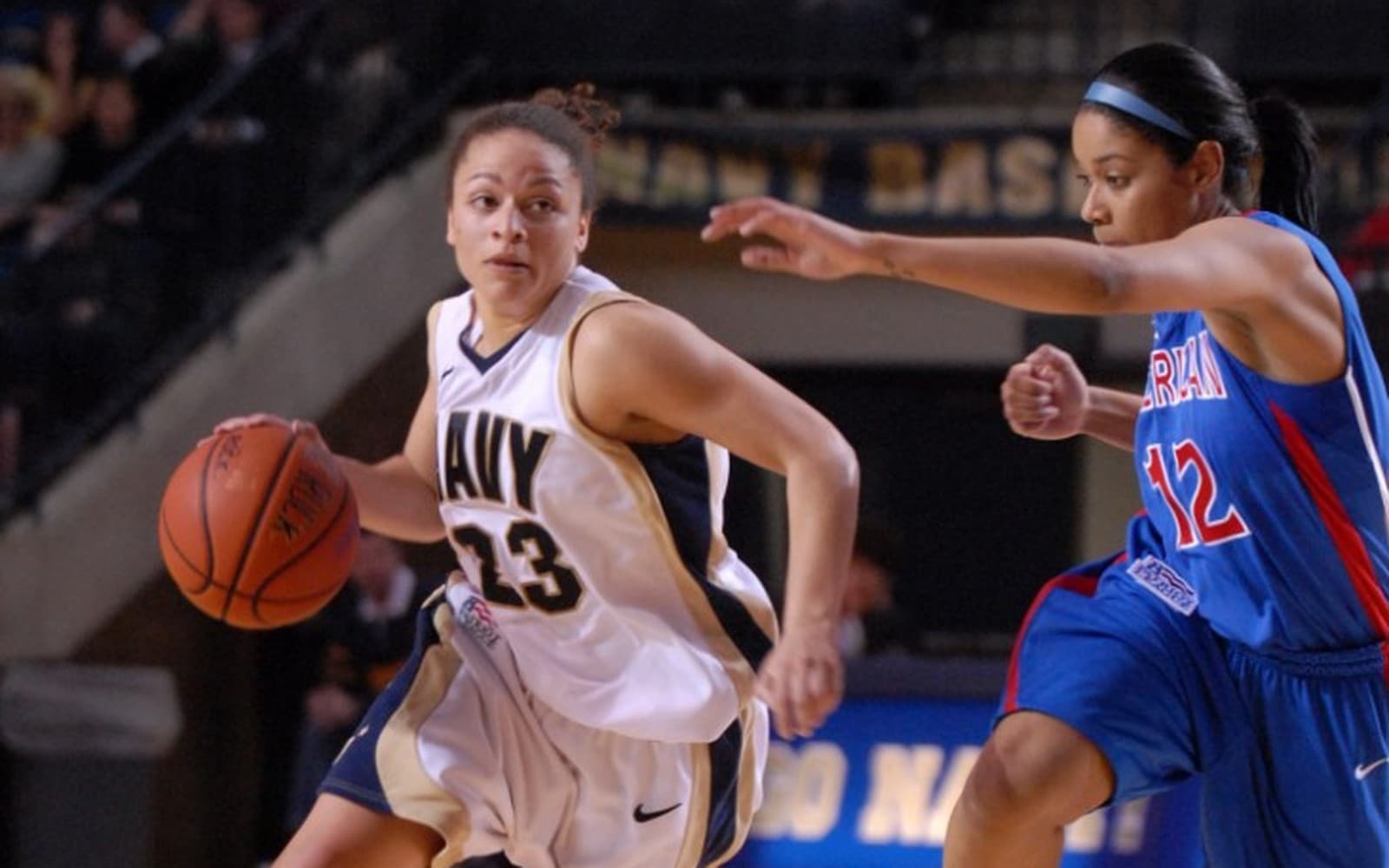
And now, the WNBA. It could not get the viewers, or the salaries, without the girl fights.
Not a hard foul because the play was hard. A fight for attention. For the cameras. For an audience. The shove, the stare-down, the argument that is a clip before it is a basketball play. Cameras mean higher salaries. Because apparently women athletes are not worshipped the way male athletes are. The men get the worship, and the money comes with it. The women, if they want the same cameras, have to make a scene. That is the part that gets posted. That is the part that pays.
The audience showed up. ESPN's 2025 WNBA regular season on its networks averaged 1.3 million viewers, up 6 percent, the most the network has had. The full season across those networks averaged 1.2 million, up 5 percent. The Finals opener drew 1.9 million.
What does that teach our high school girls? That the way to be seen is to fight. That the camera comes when you make a scene. And then the same behavior shows up where there is no court. In a school hallway. On an airplane. Somebody wants the attention. Somebody else already has the phone out. With college scholarships, draft placement, playoff hopes, and endorsements on the line, a ref can still throw a result. A finish. A game. The example is the other problem. Girls watch what gets the camera. They take it to school. They take it on the plane.
Monday
The problem with money in sports, for the broadcasters, the streaming platforms, the colleges, the leagues, is that there is never enough. The rights deals get larger. The prop menus get longer. The number of games that can be sold grows. The thing that arrives on the screen is shaped by those demands.
I still like the competition. I still like the athletes. I am less certain that the thing I am watching on Sunday is still primarily the sport. Making my usual cynicism max out.
Yeah, it is Monday, and instead of the weekend making me entertained, and Monday brighter, I am even more glum than usual.
— Julian B. Horrow