
So I Tried This Thing
So, I tried this thing. Making my own skincare with essential oils. I know. That came and went.
Sidelines - Caroline North - Avenues
Standing up for the little guy (gal)... Me.
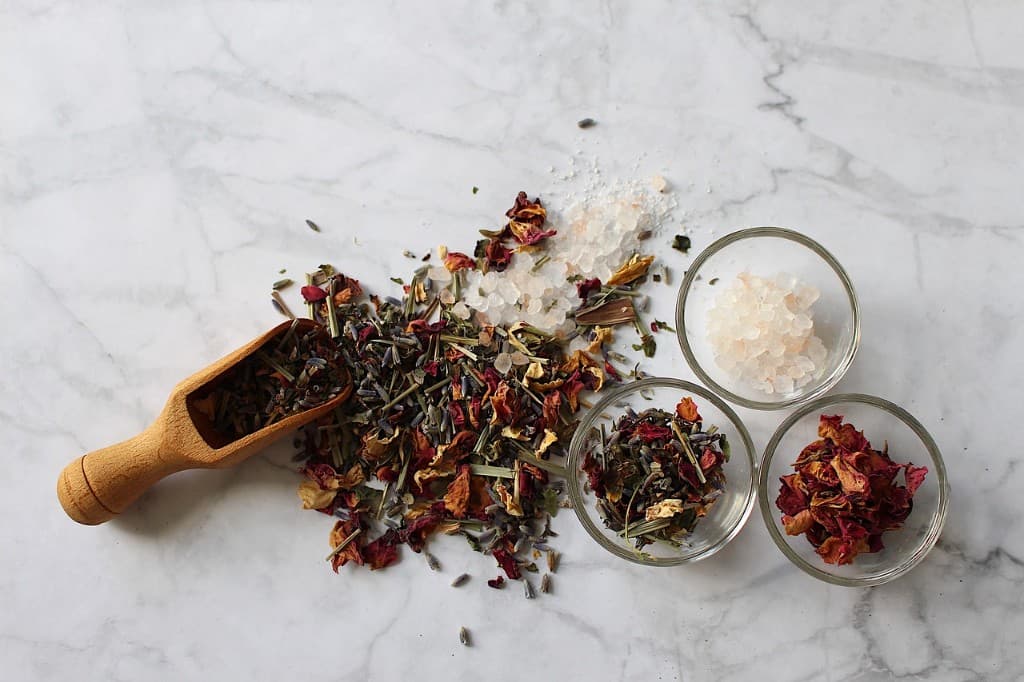
Monfocus (Pixabay)
So, I tried this thing. Making my own skincare with essential oils. I KNOW. That came and went.
Do you know why? Because we are not allowed to sell them. I mean we can sell moisturizers, but we are not allowed to tell people what essential oils do — WHICH IS MIRACULOUS — and sell them. Or at least not without hundreds of thousands of dollars in testing. You can give a newborn a vaccine tested for two weeks, but I cannot tell you my oil will STOP your knee pain. Or at least stop it for 3.45 hours. JUST LIKE ASPIRIN. I am sure it has NOTHING to do with Big Pharma.
It's illegal to advertise what actually helps you. What alleviates your pain, and your friend's pain, and their mother's pain. EVEN if you list every single ingredient, because it isn't about pain. It is about MONEY.
Yes, I understand snake oil is a thing. And of course NOTHING sold by Big Pharma comes close. Works for 28 percent of participants saw some results. Placebo saw 34 percent. And Big Med. Why treat a knee when you can spend about $35,000 to replace it? And the things being added to legalized pot, and sold as a cure — yeah, I see that as an issue, but somehow that is still legal?
I cannot sell this. At least not as people need it. I could make money. I could have an actual cottage industry, if I was not kneecapped.
I am not selling skincare. This is just what happened when I looked at the rules.
How the Rules Sort It
The FDA decides what a thing is by what you mean it to do. What you mean comes from what you say. The label. The website. The ad. The Instagram caption. It does not matter that it grew in a field. Lavender is not a cosmetic just because it is a plant.
If all you are doing is cleaning skin, making someone smell good, or making them look better, it is a cosmetic. Cosmetics do not need the FDA's permission before you sell them, except for color additives. There are still rules. Safety. Labeling. And for most firms, you have to report bad reactions under MoCRA. That is not the same as a full drug application.
The minute you say it treats or prevents a disease, or that it changes how the body works, it is a drug. The FDA's own examples are the sentences I want to say. Eases pain. Relaxes muscles. Helps you sleep. Treats anxiety or depression. A massage oil that "softens skin" can stay a cosmetic. The same oil that "relieves knee pain" is a drug. Or both. Drugs need an approved new-drug application, or a path through an over-the-counter monograph. That is the expensive part. Clinical data that it is safe and that it works for the thing you claimed. Manufacturing controls. A labeling review. Small makers do not have that money or that kind of time.
You can still sell the bottle. You just cannot say the useful sentence.
Advertising Has Its Own Line
The Federal Trade Commission looks at the ad on its own. If you make a health claim, they want competent and reliable scientific evidence. For a benefit, that generally means randomized, controlled human testing. A testimonial does not stand in for that. If you qualify the claim, people have to actually be able to see the qualification. You can talk about traditional use if you word it so you are not pretending you have a modern clinical trial. The FTC does not give you a pass for "my grandmother used it."
Same wall. Say the oil moisturizes and smells nice: cosmetic. Say it stops pain the way aspirin does for a few hours: you have made a drug claim and an ad claim, and both of them want proof most small sellers cannot buy.
What the Oils Actually Do
There is research. Reviews of randomized trials have found that putting essential oils on the skin — often lavender, sometimes peppermint or a blend, usually with a massage — lowers pain in muscle and joint problems, including knee osteoarthritis, compared with a placebo. The biggest effect tends to show up right after you put it on. Some of it is still there at one week and at four weeks, though the size is moderate. Single trials on knee arthritis have shown lower pain scores with a lavender oil massage than with almond oil, or than with no massage. The menthol in peppermint oil cools nerve receptors. That can take the edge off a pain signal.
But other oils, like frankincense, geranium, and bergamot, do far more. Not to mention oregano.
Frankincense comes from Boswellia resin. The strongest record on joint pain is the extract, not just the volatile oil. Randomized trials of Boswellia extracts taken by mouth, standardized for boswellic acids, have shown real drops in knee osteoarthritis pain and stiffness versus placebo, sometimes within days to weeks. A topical oily solution of frankincense extract also beat placebo on pain, stiffness, and function in one controlled knee trial. Massage with frankincense and myrrh oils reduced chronic low back pain and disability more than massage with a plain carrier oil. The active pieces, boswellic acids, inhibit certain inflammatory pathways. That is real data. It is also mostly extract, or massage plus oil. It is not a license to claim that pure frankincense essential oil stops arthritis.
Geranium oil has inhalation trials showing short-term drops in anxiety and pain. One trial found it lowered anxiety more than placebo after a heart attack. Others saw drops in pain after surgery, or in anxiety before surgery. They measure that over minutes to hours of breathing the scent. Not as a lasting cure.
Bergamot oil has similar aromatherapy data for anxiety, and for cutting some premenstrual symptoms — depressive affect, irritability, pain — in short controlled trials. Again, mostly breathing it, or a brief exposure.
Oregano is the one people grab when they want something that kills stuff. Lab studies show oregano essential oil, high in carvacrol and thymol, inhibits a wide range of bacteria, including some strains that resist antibiotics, and it damages biofilms. In mice with burn wounds, the bacterial load dropped after it was put on the skin. Human evidence is thinner. Small or observational work on minor infections, wound contamination, or herbal protocols that include oregano. Not large rigorous trials proving it cures a urinary tract infection or a respiratory infection the way an approved antibiotic does. That gap is exactly why "oregano oil treats infection" gets an FDA warning letter.
None of this is the same as telling a customer, as a general fact, that this oil will stop your knee pain for 3.45 hours, just like aspirin. The studies are mostly small and short. A lot of them combine the oil with massage, or they use a standardized extract instead of the neat essential oil. The effects are real and limited. They do not meet the standard for marketing an unapproved product as a treatment for pain or infection. Killing bacteria in a lab does not automatically become a clinical claim. And there are safety problems. Citrus oils can be phototoxic. Skin can sensitize. Ingestion is a risk. So is use around infants and pets.
So the oils are not inert. Some people find them helpful for mild, temporary relief when they use them on the skin and carefully. I am allowed to say that to you in a conversation. I am not allowed to say it as a sales claim without going through the drug pathway.
The Contrast That Bothers People
The comparison people reach for is vaccines. Some vaccines have been authorized or approved on accelerated pathways, or with shorter clinical follow-up, under specific public-health rules. Those products still go through a regulated drug and biologic process. Manufacturing standards. Watching what happens after they are on the market. Liability structures that do not exist for a kitchen-blended oil. The categories are different on purpose. Whether the burdens feel consistent is a different question from what the categories require right now.
Sellers of essential oils who have claimed disease treatment — pain, infection, anxiety, and worse — have gotten FDA warning letters for marketing unapproved new drugs. The letters quote the claims. The companies are told to take the claims down or get drug approval.
Cannabis looks different on the ground. State legalization lets a dispensary sell plant material and extracts for conditions the FDA has never approved. Warning letters still go out when the claims get too explicit, but the everyday market keeps going. A person can walk in and hear that a product helps with pain or sleep. The same sentence on a lavender cream triggers the full drug rules. You can see the inconsistency.
What a Person Can Actually Do
You can mix oils into a carrier oil or a cream at home, for yourself. You can note, privately, that your knee felt better for a while after you used it. You can sell a product labeled as a moisturizer, or as a pleasant-scented oil, if you stay inside cosmetic claims and follow the labeling and safety rules that apply. You cannot advertise that it treats knee pain, stops inflammation, or works like an over-the-counter pain reliever. That is what turns it into a drug, and that is what brings the evidence requirements with it.
The barrier is real. It is not imaginary paperwork. It is the difference between selling a scent and selling a claimed medical effect. Whether that difference is the right one — or whether the cost keeps useful observations off the market while other products move faster — is the part sitting on the table. I am not in the business of selling either. I just noticed where the line is drawn, and how expensive it is to cross.
— Caroline North